
A Resource to End Them in South Africa
Conversion practices cause harm. Learn what they are – and how South Africa can end them
If you need support (safety first)
Before You Continue – Support Comes First
Learning about conversion practices can be distressing, especially if you have experienced them yourself, are currently being targeted, or are worried about someone close to you.If you’re feeling overwhelmed, unsafe, or triggered, please consider reaching out to a support organisation before continuing.
You are not alone. Help is available:
Last updated: 18 June 2026

Safety Advisory
If you live in a community or household where LGBTQIAP+ identities are heavily stigmatised, please consider the following precautions:
Avoid using shared devices unless necessary.
Use a private, trusted device and secure messaging where appropriate (for example, Signal or WhatsApp).
If you delete message history or call logs after reaching out, or if you use disappearing messages, consider whether you may later need to retain a record of the conversation.
If you need to keep your communication private, consider using a personal device and personal account, and review whether messages, notifications, or contact details are visible to others.
Use an email account that does not reveal more identifying information than you are comfortable sharing.
Germany's 2020 Protection from Conversion Treatments Act established a counselling service for people who are or may be affected by conversion practices and their relatives.
Support is part of justice. Every survivor deserves to heal.
What Are Conversion Practices?

Conversion practices (sometimes called “conversion therapy”) are interventions, actions, or sustained efforts that aim to change or suppress a person’s sexual orientation (SO), gender identity (GI), gender expression (E), or, in some contexts, sex characteristics (SC).They can take many forms – including counselling, prayer, exorcism, “deliverance”, coercion, or psychological manipulation – and are typically grounded in the belief that a person’s SOGIESC is something that should be changed, suppressed, corrected, or denied.
Leading Definitions:
| Source | Definition |
|---|---|
| European Parliament (2024) | Conversion practices include psychological, medical, and religious interventions based on the false belief that sexual orientation or gender identity is an illness that can be changed or suppressed, despite global medical consensus that these practices are ineffective, unethical, harmful, and violate fundamental human rights. |
| Psychological Society of South Africa (PsySSA) | Conversion practices are discredited, harmful psychological, religious, or physical interventions – aimed at changing or suppressing a person’s sexual orientation, gender identity, or gender expression, grounded in the false idea that LGBTQIA+ identities are abnormal or pathological. |
| New Zealand Human Rights Commission (2022) | Conversion practices are any actions, treatments, or sustained efforts intended to change or suppress a person’s sexual orientation, gender identity, or gender expression – such as coercive counselling, shame-based tactics, or prayer-based interventions – which have no evidence of effectiveness and are known to cause significant and lasting harm. |
Read Full Definitions → conversionpractices.com
Across cultures, conversion practices share a common premise: that a person's SOGIESC should be changed, suppressed, corrected, or denied. These efforts cause harm precisely because they begin from the premise that people who are SOGIESC-diverse are unacceptable as they are.
About This Project
A South African reference point for understanding conversion practices – and the global movement to end them.
ZA.ConversionPractices.com is an independent South African public resource examining conversion practices through evidence, ethics, policy, and law. The project brings together international research, South African evidence, professional guidance, comparative legislation, and original analysis to make the issue more accessible to survivors, communities, researchers, professionals, journalists, and policymakers.The site is non-partisan and independent of any political party, government department, professional body, NGO, or international organisation. It does not claim to speak on behalf of survivors, communities, or institutions. It presents evidence and analysis, and it makes a clear case for comprehensive legal protection against conversion practices in South Africa.The website does not provide counselling, legal representation, or clinical services. If you are seeking support, please visit the dedicated Support section.
“Websites are critical to share knowledge and resources about conversion practices.”
– Community-Based Research Centre (Canada)
Acknowledgement
We acknowledge the survivors and activists across South Africa and the continent whose courage continues to drive change. We also acknowledge the San and Khoekhoe peoples, the first peoples of this land.

References
Sources are provided for verification and further reading.
Where this site presents an argument or interpretation rather than a source's own position, that distinction is identified in the accompanying analysis.
This site does not merely document conversion practices. Based on the evidence and ethical analysis presented here, it argues that South Africa should establish a comprehensive national prohibition that protects people from conversion practices while respecting legitimate freedom of religion, expression, autonomy, and community life.
Sunlight is the best disinfectant. To end these practices, we must first see them clearly.
An Argument for Banning Conversion Practices in South Africa

Last updated: 6 September 2026
This is a two-part argument for prohibiting conversion practices in South Africa. The first article examines why the harm caused by conversion practices needs to be clearly recognised and articulated in South Africa; the second asks what that recognition requires of the law, institutions, and the state.
Before South Africa Can Ban Conversion Practices, It Needs to Say What They Do
South Africa has said, more than once, that LGBTIQ+ people belong.The question is whether the country has said enough about what happens when people are pressured to stop being who they are.In his 2025 State of the Nation Address, President Cyril Ramaphosa declared:
“We stand for equal rights for women, for persons with disability, and for members of the LGBTQIA+ community.”
He followed that with an even broader statement:
“We stand for our shared humanity, not for the survival of the fittest.”
A year later, in the 2026 State of the Nation Address, he returned to the subject, saying that South Africa's strength comes from its “steadfast commitment to upholding the rights and affirming the dignity” of people who face prejudice and discrimination, including “persons with disabilities and members of the LGBTQI+ community.”These are significant statements.They establish LGBTIQ+ equality and dignity not as marginal concerns, but as part of the values the President says South Africa stands for.But there is a missing step.If the state is committed to the rights and dignity of LGBTIQ+ people, it should also be able to explain what happens when those people are subjected to attempts to change or suppress their sexual orientation or gender identity.That conversation needs to begin with psychology.
Being LGBTIQ+ is not a disorder
There is an important distinction that South Africa needs to make clearly.Being lesbian, gay, bisexual, transgender, queer, or otherwise diverse in sexual orientation or gender identity is not itself a mental disorder or disability.Mental-health problems are something different.A person may develop depression, anxiety, post-traumatic stress, or other mental-health difficulties for many reasons. In some circumstances, prolonged exposure to rejection, stigma, violence, abuse, or other harmful experiences can contribute to serious psychological distress.That distinction matters enormously when we talk about conversion practices.The problem is not that LGBTIQ+ people need to be “healed”. The problem is that people can be subjected to conditions that cause them psychological harm.South Africa's own policy language recognises mental health as a public-health and human-rights issue. Its National Mental Health Policy Framework and Strategic Plan identifies depression, anxiety, suicidality, self-harm, and other mental-health conditions among the concerns requiring government action.And South African government disability policy recognises that disability can arise from mental or emotional impairment and from barriers that restrict participation.The distinction is therefore straightforward:LGBTIQ+ identity is not the illness. Harmful social conditions can contribute to illness.That difference should be made unmistakably clear.Otherwise, we risk confusing the person with the consequences of what has been done to them.
What is psychological pressure?
Conversion practices are often imagined as extreme events.A person is beaten. A person is raped. A person is imprisoned. A person is subjected to an obviously abusive “therapy”.Those things are real, and South African research has documented them. But conversion practices do not always begin with an obvious act of violence.They can begin with pressure.A parent repeatedly tells a child that being gay is wrong. A religious leader tells a person that their sexuality is a spiritual problem. A family organises prayer intended to make someone heterosexual. A counsellor attempts to redirect a person's sexual orientation. A person is repeatedly told that they can be “fixed” if they pray harder, behave differently, or submit to another intervention.The important question is not simply whether someone was physically forced. It is:What was the intervention intended to do?If the objective is to change or suppress someone's sexual orientation or gender identity, the psychological dimension of the practice matters.Psychological pressure can operate through repetition, authority, shame, fear, rejection, dependency, and social isolation. Sometimes the person applying the pressure may genuinely believe they are helping.The intention to help does not determine the effect on the person receiving the intervention.
Prejudice does not remain in the abstract
This is where prejudice becomes important.Prejudice is often discussed as an attitude: what one person thinks about another group.But attitudes can become social experiences.A person who repeatedly hears that people like them are sinful, defective, dangerous, unnatural, or in need of correction does not experience those statements as abstract propositions. They may begin to experience themselves through them.That is where shame can enter. The person is no longer simply being told that someone disagrees with them. They are being given a reason to believe that their existence is the problem.Repeated experiences of rejection can affect how people see themselves, their relationships, and their place in society.This is why seemingly small interactions can matter.A comment about the way someone walks. A joke about the way they dress. A stranger's reaction to two men holding hands. A family member refusing to acknowledge a same-sex partner. A religious leader describing homosexuality as something that must be overcome. A parent repeatedly suggesting that their child would be acceptable if only they changed.Each incident may be dismissed as minor when considered alone. But psychological experience does not always work in isolated incidents. Repeated messages can accumulate.And when the message is consistently the same – you would be acceptable if you were different – the psychological pressure can become profound.
Shame is the opposite direction from dignity
This matters because President Ramaphosa has repeatedly used the language of dignity.Dignity is not simply the absence of physical injury.It concerns the status in which people are able to live as human beings whose existence is worthy of equal respect.If a person can walk down the street without expecting to be humiliated for holding their partner's hand, that matters.If a young person can tell their family who they are without expecting to be told that they need to change, that matters.If a person can seek psychological care without being told that their sexual orientation or gender identity is itself the problem, that matters.And if a person can participate in society without constantly wondering whether they will be rejected because of who they are, that matters.This is where dignity and psychological wellbeing meet. A society cannot promote dignity while ignoring the conditions that repeatedly produce shame. And shame is particularly important in conversion practices because the practice itself can reinforce the proposition that there is something about the person that needs to be corrected.
The trauma question
South Africa does not need to invent this connection.It already has research.Access Chapter 2's South African research, published through Outright International, documented conversion practices across a range of settings, including homes, religious environments, and professional contexts. The research found practices ranging from prayer and counselling to physical violence and sexual violence.The earlier Inxeba Lam' research likewise described conversion practices as involving continuing psychological and sometimes physical abuse and documented their damaging effects on survivors.International evidence adds another dimension: trauma.Outright International's 2025 African mental-health toolkit was specifically developed to help mental-health providers deliver trauma-informed care to survivors of conversion practices and describes the long-term harm associated with practices that attempt to suppress or alter sexual orientation, gender identity, or gender expression.Other research has begun to examine post-traumatic stress more directly, including a 2025 study finding associations between conversion-practice exposure and post-traumatic stress symptoms.This does not mean that every survivor develops post-traumatic stress disorder.It means that trauma is a legitimate part of the conversation. And that matters because “trauma” is sometimes used casually in everyday language. Post-traumatic stress disorder is not merely a synonym for being upset. It is a recognised mental disorder.Depression is a recognised mental disorder. Anxiety disorders are recognised mental disorders. Severe psychological distress is a real phenomenon.When people subjected to conversion practices experience these outcomes, the country should not talk about them as though they are simply experiencing a disagreement with their family or religion.Something has happened to them.The question is what.
But what if the person agreed?
This is where the psychological argument becomes more complicated.Some people seek conversion practices themselves.That fact should not simply be ignored.Adults have agency. They make decisions about their own lives, sometimes decisions that others consider unwise.But consent does not eliminate the need to examine the conditions in which a decision was made.A person may want to change because they have spent years being told that their sexuality is shameful.They may fear losing their family.They may depend upon parents or relatives for housing or financial support.They may fear losing their religious community.They may believe that remaining LGBTIQ+ means losing the possibility of marriage, belonging, or social acceptance.In such circumstances, the question cannot end with:“Did you say yes?”We also need to ask: “Why did saying yes appear necessary?”This is not an argument that every person who seeks conversion practices is incapable of making choices. It is an argument that human choices occur within social conditions. Psychology helps us understand those conditions.
The state already recognises the problem of prejudice
This is why the President's language about prejudice and discrimination matters.In 2026, he described the government's commitment as one of “upholding the rights and affirming the dignity” of people who face prejudice and discrimination, explicitly including LGBTIQ+ people.That gives government an opportunity to say something more specific.Prejudice can create social rejection.Social rejection can produce shame.Repeated shame and rejection can contribute to psychological distress.Under sufficiently harmful circumstances, people can experience serious mental-health consequences, including trauma.And conversion practices can take that existing pressure and turn it into an intentional intervention:You are this way. You should not be. You need to change.That is the psychological mechanism that needs to be made visible.
This is not an argument against religion
There is no need for the state to decide which religion is correct.There is no need to tell religious South Africans what they must believe about sexuality or gender.There is no need to prohibit people from praying.The question is narrower.A person may believe that homosexuality is sinful. A family may hold a particular religious conviction. A church may teach its doctrine. But when prayer, counselling, spiritual intervention, or another practice is directed at changing another person's sexual orientation or gender identity, the state has a different question to consider. It is no longer dealing only with belief.It is dealing with an intervention directed at another human being.That distinction is important precisely because South Africa is constitutionally committed both to freedom of religion and to the dignity, equality, and freedom of its citizens.The issue is therefore not: “Should religion be allowed?”It is: “What happens when a religious or social belief becomes a source of psychological pressure intended to change another person's identity?”That is a question the state should be able to discuss without attacking religion.
Recognition needs a psychological vocabulary
South Africa has already developed a vocabulary of rights.It has a vocabulary of equality.It has a vocabulary of dignity.It has a vocabulary of discrimination.It now needs a vocabulary for psychological harm.That vocabulary would allow government, professionals, families, religious leaders, and communities to distinguish between disagreement and intervention. It would help people recognise that conversion practices do not have to involve physical violence before they become harmful. It would help explain why repeated pressure matters. It would help explain why shame matters.It would help explain why trauma matters. And it would help explain why a person can be psychologically harmed even when the person applying the pressure believes that they are acting out of love, faith, or concern.That is not a small distinction.It changes the question from:“Why won't this person change?”to:“What are we doing to this person by repeatedly asking them to change?”
What should the President say?
The next public statement does not need to settle the entire legislative question.It needs to do something more basic.It should say South Africans who are LGBTIQ+ are not problems to be solved.It should say that sexual orientation and gender identity are not illnesses that require correction.It should say that attempts to change or suppress them can cause psychological harm.It should explain that such practices can occur outside clinical settings – in families, religious communities, and other social environments.It should distinguish religious belief from harmful intervention.And it should acknowledge that psychological harm can be serious, including the possibility of trauma and clinically significant mental-health consequences.That would not yet answer the question of what the law should do.It would, however, establish the missing premise.South Africa has already said that citizens who are LGBTIQ+ have equal rights. It has said that their dignity matters. It has said that they face prejudice and discrimination. It has said that the country stands for shared humanity.Now it needs to say what happens when that prejudice becomes psychological pressure to change who a person is.Because recognition is not the same as protection.And before a country can decide what it should prohibit, it should first be able to say clearly what it believes is harmful.South Africa has said that South Africans who are LGBTIQ+ belong.It is time to explain what that commitment requires when someone tries to make them disappear.The question of what the law should then do about conversion practices is the subject of the next article.

If Conversion Practices Are Harmful, Why Has South Africa Still Not Banned Them?
In the first article in this series, we argued that South Africa needs to begin with a question that is remarkably simple:What do conversion practices actually do to people?The answer is increasingly difficult to ignore.Conversion practices can involve psychological pressure, shame, coercion, rejection, manipulation, religious or familial pressure, and professional interventions intended to change or suppress a person's sexual orientation or gender identity. Research in South Africa has documented practices ranging from prayer and counselling to physical violence. International psychological research has associated conversion efforts with depression, anxiety, suicidality, shame, isolation, and post-traumatic responses. The point of beginning with harm is important.Before asking what the law should do, a society should be able to identify what it is trying to prevent. But once that question has been answered, another follows.If conversion practices can cause serious harm, is it enough for the state simply to tell people that they should not do them?We do not think it is.
From recognition to responsibility
South Africa has already established an important principle: LGBTIQ+ people are citizens with equal rights.The Constitution protects dignity, equality, and freedom. Section 9 prohibits unfair discrimination on grounds including sexual orientation. South Africa's legal system therefore does not begin from the premise that LGBTIQ+ people are outside the protection of the state.The difficulty is that formal rights do not automatically eliminate harmful practices.South Africa's experience demonstrates this repeatedly. A country can have progressive constitutional protections while people continue to experience discrimination, violence, and exclusion in their families, communities, religious institutions, and other social environments.Conversion practices illustrate this gap particularly clearly.If a state recognises a person's right to exist as they are, but does not adequately address organised attempts to make that person change, there is a gap between recognition and protection.That gap matters.A right that exists on paper but provides little protection against the social conditions that undermine its exercise is not the same thing as lived freedom.
But isn't existing law enough?
This is where the argument becomes more complicated.South Africa already has laws that can address some conduct associated with conversion practices.Physical assault is already unlawful. Sexual violence is already unlawful. Kidnapping and unlawful confinement are already unlawful. Children have legal protections against abuse. Professional bodies can regulate the conduct of their members. Equality legislation provides protection against unfair discrimination and harassment.South Africa has also enacted the Prevention and Combating of Hate Crimes and Hate Speech Act 16 of 2023, which includes sexual orientation among the grounds relevant to hate crimes and hate speech.But there is an important qualification: the Act has not yet commenced; its commencement remains “to be proclaimed”.More fundamentally, existing laws generally address particular acts rather than conversion practices as a distinct phenomenon.This matters because conversion practices do not necessarily present themselves as a single criminal act.A practice may consist of repeated conversations.Repeated prayer.Counselling.Family intervention.Religious instruction.Attempts to suppress behaviour.Attempts to persuade someone that their identity is sinful, defective, or temporary.Pressure to conform.An individual episode may appear insignificant when viewed in isolation. The pattern may be very different.This is why a specific public and legal understanding of conversion practices matters.Without it, the law may see individual fragments while failing to see the practice.
Consent does not end the ethical question
One of the most difficult objections to prohibition is consent.What if an adult asks for conversion therapy?What if someone sincerely believes that changing their sexual orientation or gender identity would make their life better?What if they approach a religious leader, counsellor, or practitioner voluntarily?These questions deserve to be taken seriously.Adults possess agency. They should not automatically be treated as incapable of making decisions simply because those decisions concern sexuality or gender.But consent is not the end of an ethical analysis. We already understand this in other areas of life.A person can agree to something while under pressure. A person can make a choice because they fear losing their family. A person can agree because they depend upon someone financially. A person can consent because they have been taught that refusing would make them shameful, sinful, or unacceptable.The question is therefore not simply: “Did they say yes?”It is:“What conditions produced the yes?”That distinction becomes especially important in conversion practices because the pressure to change may originate precisely from the relationships upon which a person depends.A teenager may depend on parents.An adult may depend on family housing or financial assistance.A person may depend on a religious community for belonging.A person may fear losing employment, marriage prospects, social standing, or community support.Formal consent does not make those conditions disappear. Nor does this mean that every person who seeks a conversion practice lacks autonomy. It means that consent requires context.
Freedom to exist
There is another way of understanding what is at stake here.South Africa has a long history of speaking about freedom as a struggle.The struggle against apartheid was not simply a struggle over individual incidents of discrimination.It was a struggle against a social and political order that constrained people's ability to live freely because of who they were.The situation of LGBTIQ+ South Africans is not the same, and the comparison should not be overstated. There is no apartheid system segregating LGBTIQ+ people according to sexual orientation or gender identity.But there is a related question about freedom.What does it mean to be free if a person must continually negotiate the possibility that someone else will try to change who they are?A person may be legally free to walk down a street, attend a church, visit a family member, or participate in public life.But if their ordinary existence repeatedly attracts unsolicited attempts to correct, suppress, or change their sexual orientation or gender identity, there is another dimension of freedom at stake.Call it psychological freedom: the ability to live one's life without being subjected to persistent attempts to make one's identity conform to someone else's conception of what one ought to be.This does not mean freedom from disagreement.Other people remain free to disagree with us, including about sexuality and gender.It means freedom from the assumption that disagreement gives another person a licence to intervene in our identity.For LGBTIQ+ people, that distinction can be profound.The goal is not to create a society in which everyone approves of everyone else.It is to create one in which a person can exist without continually having to defend their right to do so.
South Africa does not need to choose between religious freedom and protection
Another objection is religion.Conversion practices frequently occur in religious environments, and any South African prohibition would therefore have to take freedom of religion seriously.But protecting religious freedom does not require treating every action performed in the name of religion as immune from scrutiny.A person can believe that homosexuality is sinful.A church can teach that belief.A religious community can debate sexuality and gender.Those activities are different from subjecting another person to a practice intended to change or suppress their sexual orientation or gender identity.The distinction is between belief and intervention.The state need not regulate the theology.It can regulate harmful conduct.This distinction is already visible in international approaches to conversion practices. Spain provides an especially useful example.Spain's national Law 4/2023 prohibits methods, programmes, and therapies of aversion, conversion, or counterconditioning intended to modify sexual orientation or gender identity or gender expression, even where the person concerned or their legal representative has consented.And Spain has subsequently developed an even broader framework in Catalonia. Its 2025 Law 13/2025 states that no person may be pressured, coerced, or obliged to hide, suppress, or deny their sexual orientation, gender identity, gender expression, or sex characteristics. It also prohibits the promotion, advertising, and practice of conversion methods, including where consent has been given.That distinction is significant.The law is not simply asking whether someone was physically forced.It is asking whether another person is being subjected to pressure or intervention directed at their identity.This is one reason our comparative analysis of conversion-practice legislation at ConversionPractices.com identifies Spain's legal framework as among the strongest approaches examined.Not all bans are equal.The important questions are:What does the law prohibit?Who does it prohibit?How does it define the prohibited conduct?Does it protect only sexual orientation?Does it include gender identity and expression?Does it include sex characteristics?Does it cover only professional “therapy”?Does it reach religious, familial, and community practices?Does apparent consent prevent protection?Does the law address the promotion or incitement of conversion practices?These questions determine how much protection a ban actually provides.
South Africa needs more than a professional ban
This is particularly important in the South African context.A prohibition aimed only at psychologists, psychiatrists, or other healthcare professionals would be easier to understand and enforce.
A professional prohibition may nevertheless be an important place to begin.Psychological and psychiatric professional bodies have a particular responsibility to establish clear standards for practitioners, and the work already undertaken by the Gender and Sexuality Division of the Psychological Society of South Africa demonstrates that professional recognition of the problem is possible.But professional recognition should not become a substitute for national protection.Indeed, the absence of a clear, public position across the wider mental-health sector – including psychiatry – raises a more fundamental question: if the people treating the depression, anxiety, post-traumatic symptoms, and other consequences associated with conversion practices recognise the harm, why should the response stop at professional regulation?A professional prohibition can establish an important first boundary; a national prohibition is what extends that protection beyond the consulting room, into the families, religious communities, and other social environments in which conversion practices also occur.
But it would also miss much of the problem.South African research has already shown that conversion practices occur in homes, religious environments and other community settings, as well as professional settings.A law designed only around healthcare would therefore risk defining the problem according to the institution in which it is easiest to regulate rather than the reality experienced by survivors.The question should not simply be:“Who is allowed to perform therapy?”It should be:“Who is allowed to subject another person to a practice intended to change or suppress their sexual orientation or gender identity, and under what circumstances?”That is a much harder legislative question.It is also the necessary one.
A ban does not have to mean that everything becomes a crime
There is another important distinction.Calling for prohibition does not necessarily mean calling for imprisonment every time someone says something offensive about homosexuality.Nor does it mean criminalising ordinary religious belief.Nor should a law make ordinary exploratory counselling, identity questioning, family support, or legitimate healthcare impossible.A serious prohibition must distinguish between conduct. Some conduct may already constitute serious criminal wrongdoing. Some may warrant professional or administrative sanctions. Some may warrant civil remedies.Some may require education and prevention rather than criminal punishment.Outright International's South African legal analysis makes a similar point: criminal penalties should not automatically be the response to every harmful practice, and criminalisation can raise legitimate concerns regarding freedom of expression and association. Its more recent policy work likewise emphasises that legal responses should be precise, context-specific, prevention-focused, and survivor-informed.This is not an argument against prohibition.
This is not only a question for psychology or law. It is also a question for ethics.Ethics is a branch of philosophy concerned with how we ought to treat one another and what reasons can justify our actions. Psychology can help us identify the consequences of conversion practices; law can determine what conduct the state should prohibit. Ethics asks a further question: what do we owe a person whose identity is being treated as something that ought to be corrected?That question is particularly important in South Africa, where ethical reasoning does not take place outside African philosophical traditions. African approaches to personhood and moral life have often placed significant emphasis on human relationships, dignity, belonging, and the conditions through which people become and remain members of a community.This does not mean that African philosophy produces a single answer to the question of conversion practices. It means that the harm should not be understood only as an individual psychological injury. There is also a relational and moral dimension to telling a person that they may properly belong only if they suppress or change who they are.A society can therefore ask not only whether conversion practices make people psychologically unwell, but whether they are compatible with a conception of human flourishing in which people are entitled to participate in community without first having to become someone else.That is an ethical question. And it is one South Africa should be capable of answering in its own philosophical language.
It is an argument for good prohibition.
Why a specific law is still necessary
The strongest objection to a dedicated law is therefore not that conversion practices are harmless.It is that South Africa already has laws.But that objection confuses two different questions.The first is:Can individual acts associated with conversion practices already be punished?Sometimes, yes.The second is:Does South African law clearly recognise conversion practices themselves as a social harm requiring protection, prevention, accountability, and remedy?It does not currently do so through a dedicated national prohibition.That absence matters.A specific law can establish a common definition.It can identify prohibited conduct. It can make clear that non-physical practices can matter. It can address actors outside the professional healthcare system. It can establish reporting and enforcement mechanisms. It can clarify the relationship between consent and protection. It can provide a basis for public education.And, crucially, it can tell people what the state considers unacceptable.Law does not merely punish.Law also teaches.It establishes boundaries. It creates social expectations. It tells institutions what they must prevent.It gives individuals language for identifying conduct that previously had no name.And sometimes that is precisely what is missing.
The ethical question
The argument for a prohibition therefore does not depend on claiming that every conversion practice is identical.It does not depend on claiming that every survivor experiences the same harm.It does not depend on claiming that every person who participates lacks agency.And it does not depend on treating religious belief as the enemy.The argument is narrower and, we think, stronger.
If sexual orientation and gender identity are legitimate dimensions of human life;
if attempts to change or suppress them can cause serious psychological and other harms;
if those practices can occur through professional, religious, familial, and community relationships;
if apparent consent may exist alongside dependency, shame, stigma, or psychological pressure;
and if existing laws do not clearly address conversion practices as a distinct form of harm;
then there is a serious ethical case for the state to establish specific protections against them.
The question is no longer whether LGBTIQ+ people deserve recognition.South Africa has already answered that.The question is whether that recognition has enough force behind it to protect people from practices that attempt to make their identities disappear.
What should a South African prohibition achieve?
A South African prohibition should therefore not simply copy another country's statute.It should learn from what other countries have done – and from what they have failed to do.It should define conversion practices carefully.It should protect sexual orientation, gender identity, and gender expression, while considering the place of sex characteristics and intersex people within the legal framework.It should recognise physical and non-physical practices.It should address professional and non-professional actors.It should take dependency and vulnerability seriously without assuming that every adult lacks agency.It should distinguish belief from intervention.It should protect religious freedom through precision rather than through a blanket exemption.It should provide accessible routes to reporting and redress.It should prevent serious harm while avoiding unnecessary criminalisation.And it should be accompanied by education, professional training, survivor support, and public communication.A prohibition should not be the entire response.But without a prohibition, the response remains incomplete.
From saying “LGBTIQ+ people belong” to protecting them
South Africa has already taken the first step.It has said that LGBTIQ+ people are part of the nation.It has recognised equality.It has recognised dignity.It has recognised freedom.The next question is whether those principles have practical consequences when a person's own family, religious community, professional environment, or social network attempts to change who they are.The first article in this series argued that government should publicly name the harm: psychological pressure to change or suppress sexual orientation or gender identity can cause serious psychological consequences, including trauma.This article takes the next step.If the state recognises that harm, it must decide what protection against that harm requires.Existing laws can address some of the violence and abuse that occur within conversion practices.But conversion practices themselves remain without a dedicated national prohibition.That leaves a gap between recognition and protection. A democratic state cannot close every source of human suffering.It can, however, decide that certain forms of conduct are incompatible with the kind of society it claims to be building.Conversion practices are one of those questions.The issue is not whether every person must think the same way about sexuality or gender.They do not.The issue is whether one person's belief gives them the right to make another person the object of an organised attempt to change who they are.If the answer is no, then the next question is unavoidable:What should the law do about it?
South Africa has the outline of an answer already, in this article and the research behind it.
What has been missing is the will to legislate it.

Legislative Design Framework
A developing framework for translating the principles set out in these articles into a comprehensive South African prohibition.
Scope, consent, vulnerability, professional regulation, civil remedies, criminal offences, prevention, survivor protection, and oversight.

Further Essays & Analysis
Where Conversion Practices Are Banned

Countries are increasingly restricting or prohibiting conversion practices – South Africa is not yet one of them.
Different international trackers count different forms of protection. This site currently identifies 25 countries with some form of national or sub-national legal or regulatory prohibition, restriction, or indirect protection. The scope of these measures varies considerably.Counting methodology: this site distinguishes between explicit national prohibitions, partial or targeted prohibitions, professional/medical restrictions, and sub-national measures. See the full global dataset for classification criteria.
Global legal status by United Nations region
| Continent | Total countries | Countries with some form of legal or regulatory prohibition |
|---|---|---|
| Africa | 54 | 0 |
| Asia | 49 | 1 |
| Europe | 50 | 11 |
| North America | 23 | 2 |
| Oceania | 14 | 4 |
| South America | 12 | 7 |
| TOTAL | 202 | 25 (12,4%) |
Last updated: 2 September 2026
6 of the 7 South American entries are health prohibitions.
South Africa remains one of the many countries without national protections. While several professional bodies and NGOs have spoken out against conversion practices, there is still no legislative framework in place.
To see global bans in full detail, visit: conversionpractices.com
For the latest map and tracking, see Global Equality Caucus – Legislative Progress:
A national ban would require parliamentary action, cross-sector coordination, and survivor-informed policymaking – local psychologists, human rights groups, and SOGIESC organisations are laying the groundwork.
South Africa – The Current Situation
South Africa currently has no dedicated national prohibition of conversion practices and no national system specifically designed to monitor their prevalence, complaints, or outcomes.
Existing laws and professional standards may address particular forms of conduct, but they do not constitute a comprehensive national framework addressing conversion practices as a distinct phenomenon.
What We Know
| • | Conversion practices are documented in Christian, Muslim, Hindu, traditional, and interfaith settings; in families; and within unregulated counselling environments. |
| • | No government ministry has released formal guidelines addressing these harms. |
| • | Professional guidance exists within psychology. The Sexuality & Gender Division (SGD) of the Psychological Society of South Africa (PsySSA) has publicly rejected conversion practices and called for them to be outlawed in South Africa and elsewhere in Africa – though there is still no comprehensive national regulatory framework governing conversion practices across the mental-health sector. |
| • | Survivor testimony indicates practices still occur across provinces, often disguised as “counselling”, “deliverance”, “healing”, or “support”. |
| • | South Africa has no mechanism to track prevalence, complaints, or institutional enabling. |

Current Local Efforts
South African psychologists, researchers, civil-society organisations, survivors, journalists, and independent advocates have contributed to growing recognition of the problem.
In addition to calling for prohibition, PsySSA's SGD, supported by Outright International, has developed survivor-informed guidance for mental-health professionals.Public petitions have also called for urgent legislation.
Ending conversion practices isn’t about silencing faith – it’s about protecting freedom, dignity, and life.
How To End Conversion Practices

Ending conversion practices in South Africa will require coordinated action across mental health, human rights, law, government, civil society, and affected communities.
Professional recognition is an important starting point, but comprehensive protection requires institutional and legislative action beyond the consulting room.

How Change Happens
What Works Around the World
Across jurisdictions, several recurring elements appear in efforts to restrict or prohibit conversion practices:
| 1. | Professional bodies recognise and reject the practices. |
| 2. | Human-rights and public-health institutions document the harm. |
| 3. | Legal experts, civil-society organisations, and policymakers develop legislative responses. |
| 4. | Survivor testimony, public awareness, and political advocacy help create pressure for reform. |
South Africa already has several of the institutions and professional resources that have contributed to reform elsewhere. The question is whether they will now be connected to a coordinated national response.The Psychological Society of South Africa's Sexuality and Gender Division has publicly rejected conversion practices and called for prohibition. The next stage requires broader institutional engagement, including clear public positions across the mental-health sector, human-rights scrutiny, legal expertise, survivor-informed policymaking, and ultimately legislative action.
Building a South African prohibition
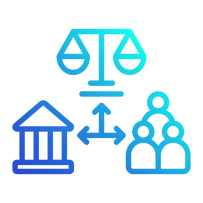
If South Africa is to effectively prohibit and address conversion practices, it needs more than recognition that they are harmful. It needs a coherent legal, professional, and institutional framework.
Scope, consent, vulnerability, professional regulation, civil remedies, criminal offences, prevention, survivor protection, and oversight.
What You Can Do

Support Existing Calls for Action
Petition: The Johannesburg Declaration Against SOGIE Change Efforts and Conversion Practices (Change.org)
Petition: Banning Conversion Therapy in South Africa (All Out)

Share and Educate
Share reliable information about conversion practices with your community, workplace, professional network, or place of religious worship.Where appropriate, direct people to survivor support and to credible evidence about the harms of these practices.

After a Ban – Continuing the Work
When Bans Alone Aren’t Enough
Even in countries with strong bans, conversion practices often continue underground.South Africa should therefore consider prevention, monitoring, survivor support, professional accountability, and community education alongside any future legislation.You can read more about post-ban recommendations at: conversionpractices.com
Ending conversion practices is a process – one rooted in truth-telling, ethical courage, and the recognition that every person deserves to live without pressure to become someone else.
Contact / Collaborate

This is an independently maintained public resource. We do not operate an open discussion forum or provide clinical or legal services.
For research, partnership, correction, or collaboration enquiries, you may use the contact form below. Responses may be limited by capacity.